L-Citrulline Malate in MemoClear: Role, Mechanism & Safety Notes
This ingredient is citrulline with a second job attached — the malate half plugs directly into the body's central energy-production cycle.
What it is
L-Citrulline Malate pairs citrulline with malic acid, a compound found naturally in apples. It is a salt form rather than a chemically novel molecule — you get both components once it dissociates.
What malate contributes
Malate is an intermediate in the Krebs cycle, the central metabolic pathway cells use to generate ATP. Supplying malate provides substrate to that cycle. In practical terms, this is the ingredient positioned against mental fatigue rather than blood flow alone.
Why both citrulline forms
Including citrulline HCL and citrulline malate together delivers the same nitric-oxide precursor through two vehicles, with the malate version adding the metabolic component. Whether this offers meaningful advantage over a single larger dose of one form is not well established — it is a reasonable formulation choice, not a proven one.
The waste-clearance claim
Marketing for this ingredient often references clearing metabolic waste that causes fatigue. The underlying idea — that improved circulation supports removal of metabolic by-products — is physiologically sound. The specific claim that this eliminates end-of-day mental heaviness is an extrapolation beyond what has been directly demonstrated.
Safety notes
Well tolerated in healthy adults, with mild gastrointestinal discomfort the most commonly reported effect at higher doses. The same blood-pressure caution that applies to all nitric-oxide precursors applies here.
Sources & further reading
Other ingredients in the formula
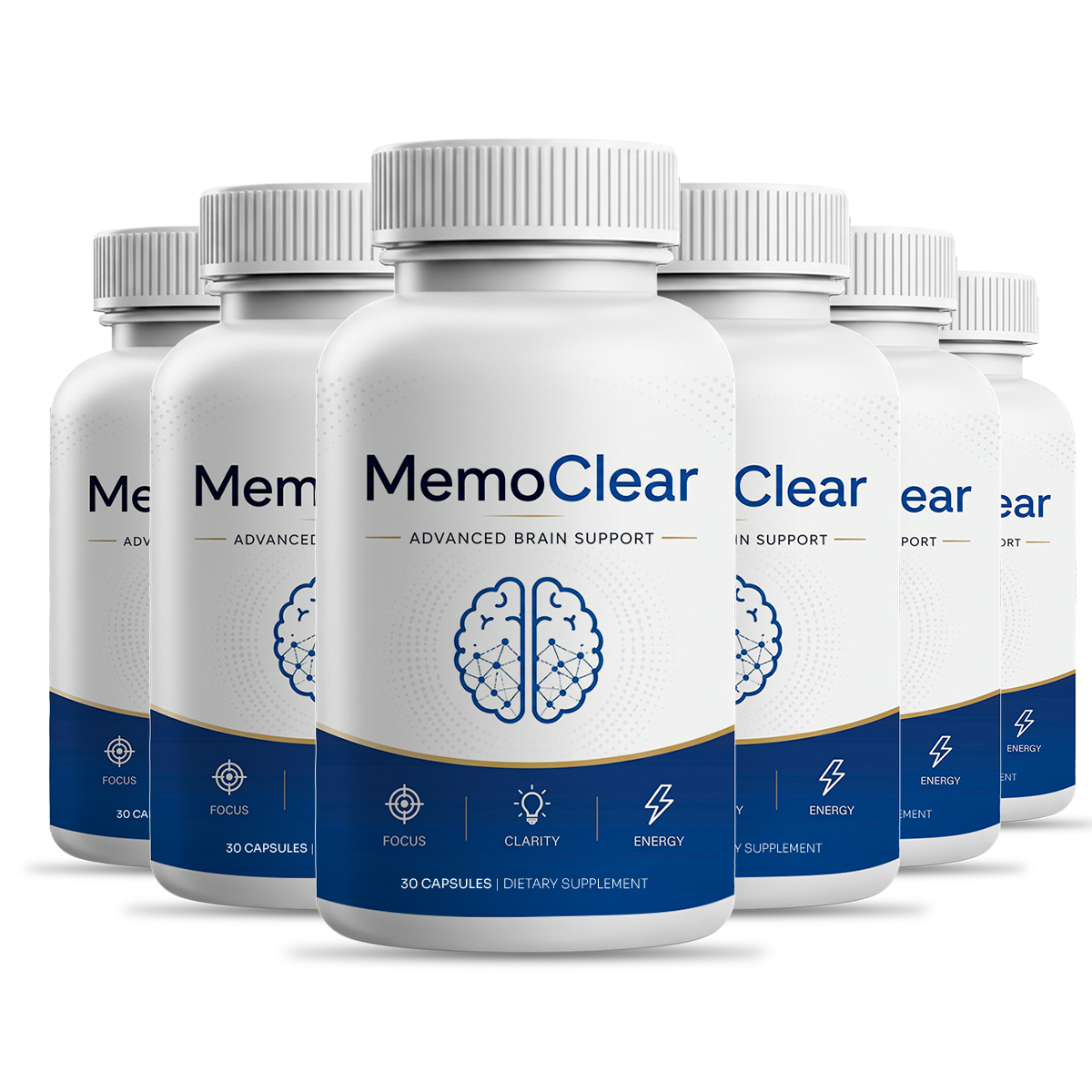
Check Current MemoClear Pricing
The 6-bottle package carries the lowest per-bottle price, free US shipping, and all five digital bonuses. Every order is backed by the 60-day money-back guarantee.